Yellowstone and Grand Tetons

July 1-4, 2016


We arrived at Yellowstone yesterday and drove right through to the Lizard Creek campground in Grand Tetons about 12 miles south of Yellowstone. We’re not big on crowds, so we figured we could camp in the less-crowded Tetons and do a day trip to Yellowstone. Seems kind of sad to do a day trip to Yellowstone, but we are trekking across the country to get to Berkeley, CA on July 8, when Ernesto needs to go back to work and I start my internship at St. Gregory’s of Nyssa in San Francisco.


A day trip to Yellowstone had us visiting a variety of spots to get a sense of the multifaceted geology of the park—Old Faithful; Midway Geyser Basin and Prismatic Pool; Artist’s Paintpot; Grand Canyon of the Yellowstone, Hayden Valley; Yellowstone Lake; and the Grant Village Post Office to mail some postcards. The geysers are hauntingly beautiful and otherworldly and the canyon area was spectacular and intriguing. Great day!


Yesterday, we did a day trip in the Grand Tetons, which are huge, spectacular and much higher (10,000 to 13,000 feet) than I anticipated. Again, we visited a variety of spots to get a feel for the place—the mountains; Jackson Lake; remote roads with wildlife; Mormon Row, an historic settlement—ending with a tram ride up to a 10,450 foot peak, the name of which I don’t remember at the moment.


As we were leaving the part on July 4th, we stopped at the two Teton Park Chapels—Chapel of the Sacred Heart, a mission of the Catholic diocese of Cheyenne; and the Chapel of the Transfiguration, a remote site of the Episcopal Church of Jackson Hole, Wyoming. They were both beautiful, but I was really taken with the huge window behind the altar of the Transfiguration Chapel overlooking the Teton Mountains—what a great way to celebrate the Creator and creation!!


Photos are posted on instagram (jujuannlulu) and facebook


Vacation Pit Stop

June 29th, 2016


I’m not sure what the date is—Ernesto tells me it is June 29th. We left Glacier this morning and made a pit stop in Great Falls to have our car checked out because it was making funny clunking noises while driving through the mountains. Luckily it was just the tires, which had large chunks taken out of them, and we knew we would need to replace the tires at some point in the near future, but discerned they were safe for travel. We were wrong. We spent the day wandering around a city park and eating gourmet, local and organic salads and Montana beef burgers at Bert and Ernie’s restaurant, which was quite good. It is nice to not be on a schedule and take time to do ordinary things like hang out in a park while getting new tires put on the car. We met a man with a macaw on his wrist that stopped and talked to us for quite a while about his bird, which talked and laughed. Everyone has been quite nice and very friendly.


Before leaving for Great Falls, we decided to stay put in Two Medicine, Grand Tetons, while camped because we didn’t trust the car. Normally we would drive around and hike in several locations to take in as much as we can, but there was something quite relaxing and special about being in one place and really getting to know it and studying it and going to the same spots over and over again. I enjoyed it.


The kids, when we are not doing something active, complain about being bored. I remember being bored when I was a kid and my mom telling me that she wished she were bored. I tell my kids that boredom breeds creativity and that they will soon find something interesting to do, which they always do. Benjamin is great at making up games to entertain himself. The other day he spent a half hour playing hide and seek with Dreamer and then he made up rock throwing games at the lake. I love watching him play because he is so creative and such a free spirit!


Two Medicine, the area we stayed in in Glacier, was at one time home to the Blackfeet Nation, which now lives on a reservation on marginal land just outside Glacier. Two Medicine is named such because of two respected elder women from different tribes that picked out locations for medicine lodges on opposite sides of the river. Thus Two Medicine is named for two sacred Blackfeet locations in Glacier, which were taken away when the Blackfeet were removed from their lands. This saddens me and it felt disrespectful having white people instruct me about Blackfeet lands and legends knowing full well that the reason the Blackfeet were not doing it was because they no longer inhabit their own land.


We are now in a hotel just outside of Bozeman to regroup, take showers, do some laundry, and figure out our next adventure. We will eventually make our way to Yellowstone and the Grand Tetons, but in the meantime, we will relax, repack the car, empty out the cooler, and get a good cup of coffee. It feels strange to be indoors after camping the last few days when we spent nearly 100% of our time outside or in a tent. I get used to the feel of the sun on my face and the natural light and the rhythm of the sun and the breeze through my hair and the beauty of the landscape being so present everywhere I turn. Creation is glorious!


We are learning about Montana kind, which is akin to Minnesota nice, but different. OK, take this with a grain of salt, because I am not from Minnesota, I cannot fully understand Minnesota nice, but sometimes it seems like a euphemism for Minnesota passive-aggressive. Confession: I can’t really figure out Minnesota nice. Montana kind on the other hand was very palpable and contagious as everyone we met was truly kind and went out of their way to talk to us, often for long stretches of time, like Randy at the local grocery store who related his travels all over Mexico to Ernesto when he learned that Ernesto’s parents were from Mexico. Or the women at the thrift store who went out of their way to determine if I could use a particular coupon and the man who waited patiently while they figured it out. Everyone took time to talk and ask questions and tell us about themselves and their town; I wonder what it would be like to take time to truly listen and be present to anyone I encountered. Is it a function of living in an urban area that gives me the permission to be too busy to care about kindness to the stranger?


The following reflection about hiking in Two Medicine was written by one of my family members that wishes to remain anonymous, but it is beautiful and I want to share it.


You know when you’re out rock climbing or hiking and your guide tells you to not look down or you’ll fall? Well what if there was another reason they told you that?

I climbed one of the mountains in Two Medicine; not far up, but high enough that when I turned around to finally look down, it was breathtaking. Just standing there I could see for miles and miles. Anyway, what if the reason you were told to not look down/back is that if you do, and you see how far you’ve come, you won’t want to keep going because the view from where your standing is so amazing that you don’t think that the view a little higher up might be more spectacular than the one in front of you?

When I was standing looking down from the mountains, I almost forgot that there was another two thirds of the mountain behind me, what if that’s what your guide means?

Maybe that’s all that you’re supposed to gather from that, but what if you can apply that same principle to life? What if when you stop and look back at all that you’ve accomplished in your lifetime, you won’t want to keep moving forward, because you’re afraid that you’ll spoil the picture that you’ve created so far, instead of adding to it. I don’t know, maybe I’m just crazy. (By an anonymous Luna)
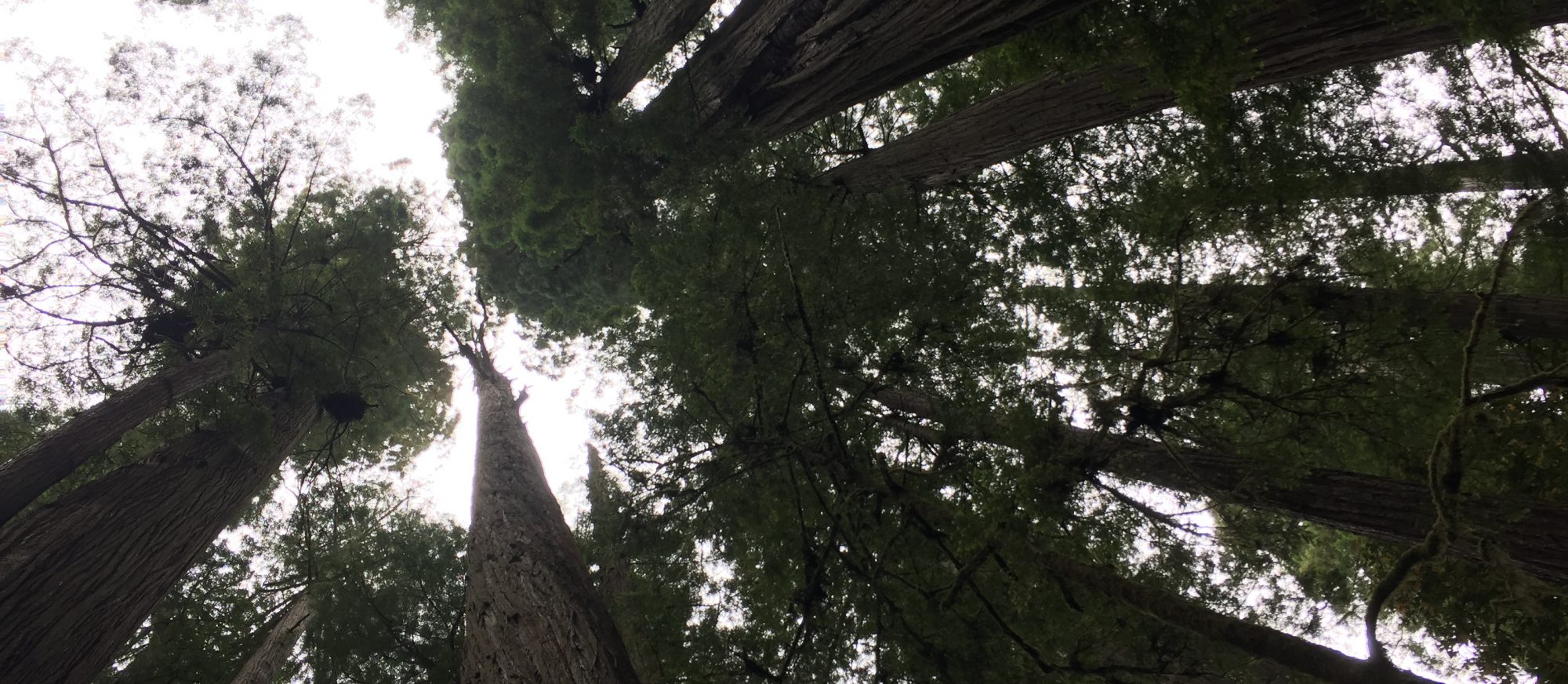
 

Glacier National Park

Glacier National Park, June 27, 2016

Yesterday, we arrived at Glacier National Park. It is more spectacularly beautiful than I could ever describe in words. We are camping at Two Medicines near the river with the same name. No internet access so I’ll post later in the week.

After setting up camp my body sighed in relief—finally, nothing I have to do. It is so rare that I allow myself the luxury of doing nothing. And my brain usually has so many thoughts rattling around and banging into each other that my head might explode. I’m at a loss for words this morning. Ahhh….

Ernesto, Dreamer, and I canoed the length of Lower Two Medicine Lake while Benjamin and Elena hiked up to Two Falls. Beautiful day!

Glacier National Park, June 28, 2016

Big storm through the night. I reminded Ernesto that it was good that I pushed to buy the really expensive tent with a good rain fly. This was 12 years ago when we gave up backpacking for tent camping with our kids. The tent is still going strong!!

Benjamin and Elena took a guided trail ride where the guides told them the Native American legends of Glacier. I was jealous. I was writing my Thinking Theologically paper. Almost done.

Another beautiful day! More later….

Driving through Montana

OK, I have to backtrack a bit. Reflecting on my last post, I realized what I said about our bodies being suited to a geographic area, might be construed as having a Trumpian bent. I could see Trump use this geographic excuse to keep Mexicans in Mexico, and Muslims in the Middle East. Just to be clear—that is NOT what I meant. I could never agree with Trump’s racist views and hate rhetoric. And I don’t think that God has a grand plan for us that calls for us to live in a particular geographic area.

I wanted to express that my relationship to the environment is much more complicated than I’ll ever be able to understand. As Christians, we have cultivated a mindset that we are separate from the environment. Maybe this stems from the first creation account in Genesis where we are told to have domination over the earth. Yet the second Genesis creation story mentions no such thing. Plus, why would dominion mean control, as we’ve interpreted it, rather than care?

For a class I read an article by Jonathan Balcome called fish have feeling too (http://www.nytimes.com/2016/05/15/opinion/fishes-have-feelings-too.html?_r=0). In this article, Balcome, a scientist that studies fish, discusses the goby fish that can swim over a rocky tide pool at high tide and memorize, in one try, the layout of the rocks for up to 40 days. The goby fish has clearly developed a relationship with those rocks that protects it from predators.

As we drive through buffalo country I am reminded of how this prairie land and the buffalo lived in a symbiotic relationship. Or closer to home, my backyard chickens that eat my compost, which turn into eggs and chicken poop. The latter fertilizes my garden and the vegetables and fruit that we eat. It is a complex symbiotic relationship. Why do I not live a symbiotic relationship with God’s creation? How could I live this way? How do I adapt on a cellular level according to the environment in which I live? When I lived in Berkeley, it took me about four years to figure out the seasons, subtle as they were, there was a pattern to the weather and my body adjusted. How could we as a Christian people explore our relationship with God’s creation and promote creation care based on a symbiotic relationship rather than control?

It’s construction season. Every highway has heavy equipment that eats up roads and spits them out into dump trucks that haul millions of concrete bits to who knows where. Ernesto comments, “Those are machines that only Jules Verne could have dreamed up.” He recounts how he recently stopped by a construction site in Minneapolis to discover how foundation beams interlock to form a wall. Ernesto’s curiosity quotient is bigger than the state of Montana. Just one of the reasons I love him.

We’re driving north on highway 13 towards Wolf Point, Montana. For miles the telephone poles are snapped off like toothpicks and the lines fly in the wind or writhe on the ground. The gas store clerk in Circle told me that a big storm came through last night. Must have been some winds that chopped off the poles like a knife going through butter. I am reminded that we can’t always control and tame nature—wind is wind; God is God.

We have seen only open ranch land and farmland, with the exception of the Badland of Theodore Roosevelt National Park, since we left Bismarck, North Dakota. Lots of imagining in the car about what it would be like to live in nowhere land with houses 20 miles or more apart. I feel lonely when I imagine it. I think it is the lack of trees that bothers me. Trees are my friends. Elena would like to have five lives so she can experience living in a number of places. Benjamin wants to ride his bike through it but expressed no desire to live here.

I stocked up on paper maps before getting on the road. I love paper maps. My phone is convenient for getting me around town, but I’m always a little frustrated that I can’t see where I am going in that tiny little screen. I like to spread out a map and pinpoint my destination and look for routes based not on efficiency but on interest.

Interesting things today:

  • Clouds so low we could touch them (Benjamin)
  • Baby cows that are so cute (Elena)
  • Crazy road construction equipment and open landscape (Ernesto)
  • Wild land formations (Badlands of Theodore Roosevelt National Park) and buffalo pies—evidence they are still on the plains (Julie)
  • That cute dog I wanted to play with at the rest stop (Dreamer)
  • The intense rain storm we drove through with bright blue skies in the north and menacing storms to the south (everyone)

And God saw that it was good! (Genesis 1)


On the Road

We did it—we got out of the house and on the road about 7:30 yesterday morning. Before I go into that, a few confessions.

  1. I haven’t figured out how to post photos on my blog site. In terms of technology, if I can’t figure something out right away, I get frustrated and give up. I’ll keep working at it, but in the mean time, I’m on Instagram, which I love. I am jujuannlulu because julieluna was already taken (can you imagine two of me out there?). I sometimes post on Facebook and I think you can find me there under Julie Luna.
  2. I don’t like small confined spaces. Traveling with a dog, two adults and two adult-sized teenagers, and a whole carload of camping gear is a bit claustrophobic for me. I was pretty grumpy and agitated when we reached Mandan, South Dakota.
  3. I didn’t write a paper for my Thinking Theologically class before we left. I was hoping to get it done last week, but it was crazy getting the garden and house ready to leave for such an extended time. And that is probably the real reason that I’m grumpy—I need to write this paper on the road. And having to bring along extra books for research doesn’t help with the claustrophobic factor. Lucky for me, Ernesto likes to drive so I can sit in the passenger seat with my laptop. (I’d rather listen to the book on CD that Benjamin brought.)

Our first stop was Breezy Point, Minnesota to pick up Elena from figure skating camp where we saw a show by all the young women that skated and learned that week. It was fabulous! Then we drove to Mandan, SD, which is just outside the capitol Bismarck.

The effects of the oil boom and bust are palpable here. Lots of new construction that has halted to a dead stop with large construction equipment scattered about like overgrown Tonka trucks and streets intended for homes that dead end into farm fields. I feel for the people here that waged their bets on making a living for their families and were let down. Being here I am haunted by

South Dakota is quite flat and desolate. When I walked Dreamer this morning she chased tumbleweeds. I am reminded of Willa Cather’s description of the vast plains of the Midwest being oceans of grasses flowing in the wind. Cather found this landscape comforting. I suppose what we call home, our homeland, is what we ultimately find comforting. Is it just what we are used to or are we meant to be part of particular landscapes and eco-systems? I’m convinced that God’s creation is much more complex and complicated than I will ever understand. Perhaps I am meant to live in a certain geographic area because my body’s response to it will cause me to want to care for this creation? When I moved to Berkeley, California in August, the dry season in the Bay Area, I dreamed (literally) of thunderstorms every night for weeks. It was as though since they were not physically present, my body was going to recreate them for me because they were so ingrained in my Midwest rhythm of seasons. And I never got used to earthquakes—I’ll take tornadoes any day!

Need to get back on the road…blessings to God’s creation and a prayer for our care of God’s creation. Thanks be to God!

On Leaving for San Francisco

I’ve lost track of the date—an unsettling, but good feeling. The last few weeks, since I finished my first year of seminary, have been crazy, but fun. Two days after the kids were done with school, we took a road trip to Ohio, Michigan, and Ontario to visit my family. These are the places where I grew up, my homeland as it were. Each time I go, in some small way, I reclaim parts of myself that I tried hard to leave behind when I left there and moved to California after completing a Master’s degree. My spiritual journey has included moving away from and returning to many places that I claim as homeland.

As I prepare to leave for a family road trip, with San Francisco as my final destination, I am reminded of many Biblical journeys—Abraham and Sarah leaving their home in search of the promised land, the sojourners in the wilderness after leaving Egypt for freedom in Canaan. In no way is my impending journey an epic adventure like these, but is perhaps more akin to Naomi and Ruth returning to Naomi’s homeland. Despite the nature of my trip, I ponder the Scriptural themes present in Biblical journeys that tug at me—leaving home; being a stranger in a strange land; welcoming the stranger; finding food and shelter; fear of the unknown; trust in myself, others, and God; being lost (physically, spiritually, and emotionally); finding the way; hospitality; being present to God’s pull toward adventure; and staying in touch with the longing and desire to reach the unknown.

San Francisco and the Bay Area, where I lived for 15 years prior to moving to Minnesota, are not my true homeland, but in many ways it is the place where I grew up. Not literally grew up, but grew up emotionally and spiritually, and where I learned to love myself and learned to know what makes me happy and gives me life. Moving to Berkeley, California, right out of a Master’s program to start a new job, was not an easy transition. I had one acquaintance in Berkeley, but other than that, knew not a soul. It was a clean slate from which I could build a life in whatever fashion I wanted. I explored and practiced different religions, made new and interesting friends, had romantic relationships, lived in a tiny, rent-controlled apartment with a view of the San Francisco Bay, went hiking every chance I got, and sat and listened to the ocean for comfort and joy.

A few years into my stay (I called it a “stay” because I never intended to settle there) in the Bay Area, I met my husband, we had two children, and then we moved to Minnesota, my homeland of the Midwest. Hence, I’ve done this before—moved away and returned to a “homeland”. Each time I do, it is a marker of how I’ve grown and changed. I anticipate my returning to the quasi-homeland of San Francisco will be one of these markers in my life.

Last week I completed an intensive class called Thinking Theologically Confessing Publically where we spent quite a bit of time discussing what it means to be a religious person/community in a secular age. This feels especially pertinent to me as I prepare to leave for San Francisco, which in my experience is one of the most secular cultures in the U.S. When I first moved there my immediate impression was one of materialism and lack of spirituality. This was unsettling for me, but afforded me the opportunity to explore religion and spirituality and come to my own conclusion about how I wanted to embrace them in my life. I am looking forward to returning as a religious person to see if my initial impressions have changed and if not to be strongly challenged to live as a religious person in a secular city.

I am returning to San Francisco for a month to be present in a church community called St. Gregory’s of Nyssa. I do not yet know what I will do when I am at St. Gregory’s; my main goal is to watch, listen, and learn from this open and progressive Episcopal community. When I left the Bay Area, I had already returned to Catholicism, the religion of my childhood, but I was not satisfied. I return to San Francisco as a devout and practicing Episcopalian and as a postulant for ordination to the priesthood. I am much more grounded and secure in my faith life and religious practice than I was leaving San Francisco. It will be interesting to see what manifests for me when I participate in a lively and life-giving Episcopal church in a place where I doubted the validity of religious practice.

As I write this, I’m sitting in my yard, with my dog at my side, watching a few of our chickens roam, while I intermittingly try to get some gardening done before I leave. I’m a homebody! I love being at home—this is my idea of a perfect day. Yet I am drawn to adventure, drawn to return to San Francisco, one of my homelands, to learn about a church community, but also to reclaim parts of myself that I may have left behind. I ask for God’s blessing on this journey, for peace, comfort, and safety for me and my family as we travel. I ask for God’s grace to be open to all that I am to learn and in all the ways in which I will grow and be transformed. Amen!

Hope in the Wilderness

In the fifteenth year of the reign of Emperor Tiberius, when Pontius Pilate was governor of Judea, and Herod was ruler of Galilee, and his brother Philip ruler of the region of Ituraea and Trachonitis, and Lysanias ruler of Abilene, during the high priesthood of Annas and Caiaphas, the word of God came to John son of Zechariah in the wilderness. He went into all the region around the Jordan, proclaiming a baptism of repentence for the forgiveness of sins, as it is written in the book of the words of the prophet Isaiah, “The voice of one crying out in the wilderness: Prepare the way of the Lord, make his paths straight. Every valley shall be filled, and every mountain and hill shall be make low, and the crooked shall be made straight, and the rough ways made smooth; and all flesh shall see the salvation of God.”

In this season of Advent, of waiting expectantly for the Messiah to come, we are waiting in a wilderness of gun violence, murder, racism and brutality, among other things. I keep asking myself, “What created this wilderness of hatred and fear? Who created this wilderness of hatred and fear? And most importantly, How have I contributed to this hatred and fear?”


I live comfortably in a home with heat, plenty of food to eat, a car to get around, entertainment, a nice garden, a dog and a wonderful family. On the surface it appears that I probably have nothing to do with this fear and hatred, yet I’m complicit in the very fact that I’m complacent. I refuse to buy into the rhetoric that we need to ban refugees from entering the United States, yet I haven’t inquired about how my church might sponsor a refugee family. I mourn for those killed in recent gun violence and I want gun control, yet I have not spoken out publically about it.


I keep asking myself, “What are the ways in which I can make a straight path, how can I make a mountain low (level the playing field) or fill a valley (with love and peace). What are the commitments that I can make this Advent season while I await new life; a life outside of the wilderness of hatred and fear

My Neighbor Lives Right Next Door

You shall love your neighbor as yourself.  (Matthew 22:39b)

Sometimes my neighbor is closer than I want her to be. When neighbor is an abstraction like the migrants fleeing Syria it is easy for me to love them.   Or when my neighbor is the hungry person in the public housing complex down the road, it is easy for me to love him. And when my neighbor is the mentally ill person across town or the eldery in the convalescent home that I never visit, it is easy to love them. But as it happens, the neighbor I need to love lives right next door.

One of our favorite stories from the recent past is what some of our friends dubbed “Chicken Gate.” On Easter, our 93-year-old neighbor, “grandma” Doreen, gifted my children 2 chicks, which they named Cheep and Peep. Doreen said to me, “Won’t it be fun to watch them grow!?” (Of course Doreen meant it would be fun to watch them grown in the Luna yard!)

Folks in our town worked hard for over a year to pass an ordinance that would allow home-owners to keep chickens. One of the requirements is obtaining a permit to keep chickens, upon which our neighbors needed to agree. One of our neighbors was not in agreement so we were called to City Hall for a hearing. (She was vehemently opposed and wrote a nasty letter about us and called City Hall several times complaining about us.) Come to find out, she would rather have quiet neighbors next door, and our active family does not fit her definition of quiet.

The day before our hearing, the City Planner called to remind us to be at the hearing. The day of the hearing, our City Council member knocked on our door to talk about the chickens and to remind us to be at the hearing. When we arrived at the hearing, the Mayor introduced himself and said he was looking for us and was glad we showed up to the hearing. (We were thrilled—this was small town democracy at its best and a great hands-on civics lesson for all of us!) After some deliberation, and me and my husband declaring we didn’t mean to cause strife in the neighborhood, we were granted a one-year permit to keep our chickens. Our City Council member suggested we take some eggs to the neighbor as a peace offering.

A few weeks into building the chicken coop, the neighbor’s son gave Benjamin a stack of egg cartons (a peace offering?). Julie took him a half dozen eggs (two chickens don’t make many eggs) and turns out he is something of an expert on chickens—he could identify the kinds of chickens they were by the type of eggs, and he is good at caring for sick birds and offered his assistance if needed. Our neighbor (his mom) still hasn’t come around, but we are not giving up on her!

My children feel our neighbor’s animosity towards our family and are bewildered. I keep telling them, we need to love her. She is suffering in some way that we will never know, but all we can do is love her.

I like to think that this story is one small example of how we live our Christian story every day—birth, life, conflict, judgment, reconciliation, redemption, and even death (e.g. letting go of judgment about our neighbor).  And most of an example of how the neighbor I need to love sometimes lives right next door.

In the aftermath of the Paris shootings and bombings, I am once again reminded to love my neighbor—all of those involved including the shooters and bombers. I don’t condone the violence and am aware that the shooters and bombers must be in a state of suffering and despair to put themselves in a position to kill. But again, this is an abstraction for me. In a county, like France, where the unemployment rate of the Middle Eastern immigrants is greater than 20%, I wonder what would happen if the country embraced the Middle Eastern neighbor and helped him/her find a job and live a more dignified life. What would happen? Instead, the French government is breaking into homes looking for weapons (this is a necessity, I understand). What would happen if this was balanced by social programs that supported Middle Eastern immigrants? What would happen if the neighbor, the Middle Eastern, immigrant felt loved? How can we love this neighbor?

Respecting My Neighbor

The second is this, ‘You shall love your neighbor as yourself.’  There is no other commandment greater than these.  (Mark 12:31 NRSV)

Part of loving my neighbor is respecting him/her even if we differ in how we live our lives or how we would approach problem solving. I am currently reading about Eleanor Roosevelt’s life and work and despite the incredible amount of good she did, I am struck by what I perceive to be her paternalistic tone towards the masses of people that were not the elite class from which she came. I am left wondering, how do we bridge the gap between those of us who have the resources and money to help alleviate poverty and inequity and those of us who are stuck in poverty and experience inequity. How do we work together, learning from each other without the elite simply setting out to fix a problem of which they know little or nothing about? (Granted some of them may have rose out of poverty, but this is a very small percentage.)

I am often dismayed by the inequities I see in many aspects of our culture—economic and education disparities being especially near and dear to my heart. As an idealistic college graduate I set out to “fix” these disparities by working in fields that were primarily concerned with social justice. My biggest concern was how to figure out how to involve others, those who were the recipients of inequity, in the process of problem solving. This is one small example of how I did that.

 I created a project for a group of students from the small, privileged, private school where I taught high school math in Oakland, California. I decided to take them to a second grade class in the High Street district of Oakland, California, which has one of the highest homicide rates in the country. (I also spent a lot of time in this neighborhood where I volunteered at the Oakland Catholic Worker.) Prepping the students before we went, I gave them the demographics and briefly described the school, teacher and students. I also gave my students the assignment of working with the younger students to come up with a project that all the students could work on together. They decided to create a video of the student’s neighborhood. The older students helped the younger students come up with a list of questions each student would answer while conducting interviews in their neighborhood. The result: the younger students decided to take us to each of their homes where they would introduce us to family and pets, and talk about what it was like to live in their neighborhood. In a neighborhood where gunshots were as common as barking dogs, many of the students had never visited each other’s homes for fear of getting caught up in something that may jeopardize their safety. During this process, many types of communities were being formed: the younger students grew closer to one another after knowing more about their home lives, the older students created a close bond as they grew to take more and more responsibility for the younger students. Emily, a high school student, stayed in touch with a younger student, Alejandra, for years after the completion of the project. In the end, many profound things happened: racial lines were crossed, socio-economic lines were crossed, age differences were overcome, students became teachers and facilitator, and many students expressed themselves in ways that were new and different. Although, this may seem like fleeting community, it had lasting impacts.

I realize that no one was taken out of poverty during that project, but I do wonder how if affected all of the students and if and how they made different choice in their lives as a result of that project.

Who Is Blessed?

Who is Blessed?

 Now the Lord said to Abram, “Go from your country and your kindred and your father’s house to the land that I will show you. I will make of you a great nation, and I will bless you, and make your name great, so that you will be a blessings. I will bless those that bless you, and the one who curses you I will curse; and in you all the families of the earth shall be blessed.” (Genesis 12: 1-3, NRSV)

Every Sunday after church, I go to the local, independent bookstore and purchase the Sunday New York Times. I get some of my news from online sources, but I love the gritty feel of the newsprint and the leisurely way that I can pick at the paper all week long until I’m satisfied that I’ve read enough.

Lately, I’ve been drawn to the stories of migrants streaming from one country to another. Mostly, I’ve been pondering how we, as the culture and media, phrase such stories as the “the migrant crisis.”  Recently, as I was reading a New York Times article about a woman named July and her three children trying to flee gang violence in Honduras, it really put a name and to the story of violence in Central and South America. I saw her face and those of her children in a photograph and read their story of leaving Honduras only to be caught in Mexico and returned to the same town where her son, while walking to the market to buy food, was killed by gang members.

When I talk about migrant migration as an issue or problem I am framing it as an anonymous paradigm for which we can create policy to “solve the problem.” I forget that each of these crises is made up of human beings that have stories, longings and hopes for a dignified life without violence. Don’t get me wrong, I believe we need to create policy to create a structure that supports the dignity of human life, but I wonder what our policy would look like if we approached decision making with human beings in mind rather than the anonymous paradigm that we so often employ.

I am currently reading about Eleanor Roosevelt and her huge leadership role in writing and advocating for the Universal Declaration of Human Rights. I am keenly aware, when in a time of protecting geo-political interests of large nations after WWII, Eleanor Roosevelt was protecting the rights and dignity of human beings that can become forgotten or neglected in the jockeying of the global political sphere. Article 14 (1) of the Universal Declaration of Human Rights states, “Everyone has the right to seek and to enjoy in other countries asylum from persecution.”

You shall not deprive a resident alien or an orphan of justice… (Deuteronomy 24: 17a, NRSV)

When I read the story of July, and how a policy of the Mexican government forbade her to remain in Mexico, I can’t help but wonder how I can reframe my understanding of the migrant “crisis” to include the stories of human beings and how they are being affected by global politics. And also ponder what our world would look like if policy was created based on human dignity as outlined in the Universal Declaration of Human Rights. Or if we treated July as though she was living as a blessing and we offered her refuge as a resident alien. I wonder…

References

Refugees at Our Door,” The New York Times, Sunday, October 11, 2015

UNIVERSAL DECLARATION OF HUMAN RIGHTS Adopted by UN General Assembly Resolution 217A (III) of 10 December 1948